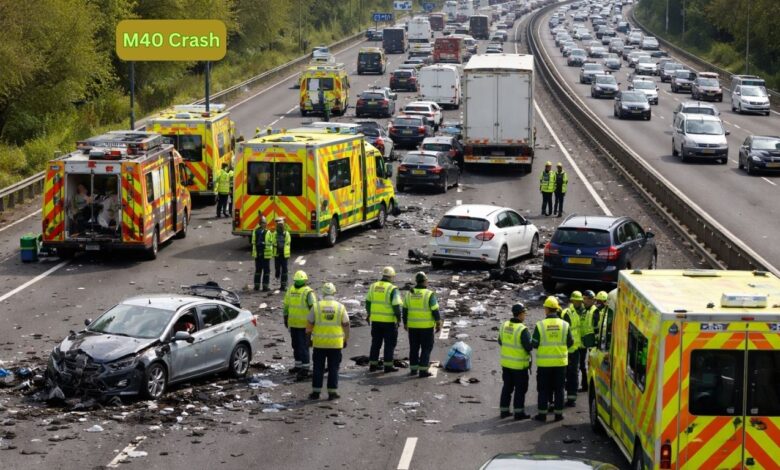
Motorways play a critical role in modern transportation, connecting cities, supporting businesses, and enabling millions of daily journeys. Among these major routes, the M40 is an essential motorway that experiences heavy traffic throughout the year. When an m40 crash occurs, it often attracts attention due to the scale of disruption, safety concerns, and wider consequences for drivers and local communities. Understanding why these incidents happen and how they are managed can help motorists stay informed and prepared.
This comprehensive guide explains motorway crashes in a clear, expert, and human-friendly way. It covers causes, immediate and long-term effects, emergency response, legal implications, and practical safety tips. Whether you drive on the M40 regularly or only occasionally, this article will help you better understand motorway safety and responsible driving.
Understanding Motorway Crashes on the M40
Motorway crashes differ significantly from accidents on local or urban roads. Higher speeds, heavier vehicles, and constant traffic flow mean that even a minor error can quickly escalate into a serious incident. The M40, linking major regions, experiences a mix of commuter traffic, long-distance travelers, and commercial vehicles, all of which increase complexity.
An m40 crash may involve a single vehicle or multiple vehicles across several lanes. Because traffic moves quickly, drivers have less time to react, and stopping distances are much longer than on slower roads. This is why collisions on motorways often lead to severe vehicle damage and injuries.
The layout of the motorway also plays a role. Long straight stretches can lead to reduced concentration, while junctions and slip roads create merging points that require careful attention. Sudden braking near these areas is a common trigger for chain-reaction collisions.
Understanding these factors helps explain why motorway incidents can be more disruptive and dangerous than other road accidents.
Common Causes of M40 Crashes
Driver Error and Risky Behavior
Human error remains the leading cause of motorway accidents. Distraction is one of the most significant contributors. Using mobile phones, adjusting navigation systems, or even momentary lapses in attention can have serious consequences at motorway speeds.
Speeding is another major issue. Although the motorway is designed for faster travel, exceeding speed limits reduces reaction time and increases braking distance. In the event of a collision, higher speeds also result in more severe injuries.
Fatigue is particularly dangerous on long journeys. Drivers who fail to take regular breaks may experience slower reaction times and impaired judgment, increasing the risk of drifting lanes or failing to notice slowing traffic.
Tailgating and aggressive driving behaviors further increase danger. Leaving insufficient space between vehicles removes any margin for error if traffic conditions suddenly change.
Weather, Road, and Vehicle Conditions
Environmental factors play a crucial role in motorway safety. Rain reduces tire grip and visibility, increasing the risk of skidding or aquaplaning. Fog can severely limit visibility, making it difficult to judge distances accurately.
Roadworks are another common factor. Temporary lane closures, reduced speed limits, and unfamiliar layouts can confuse drivers, especially those unfamiliar with the route. Failure to adapt speed and attention in these areas often leads to collisions.
Vehicle condition should not be overlooked. Worn tires, faulty brakes, or poor lighting can significantly reduce a vehicle’s ability to respond in emergencies. Regular maintenance is a simple yet effective way to reduce accident risk.
Immediate Impact of an M40 Crash
When a serious motorway accident occurs, the immediate impact is often widespread. Traffic flow can come to a sudden halt, leading to long delays and frustration for thousands of drivers.
For those directly involved, injuries may range from minor to life-threatening. High-speed collisions can result in complex injuries requiring urgent medical care. Even drivers not physically injured may experience shock or emotional distress.
An m40 crash can also affect emergency access. Congested lanes may slow down ambulances and rescue teams, making rapid response more challenging. This is why motorway awareness campaigns emphasize the importance of creating emergency corridors when traffic is stationary.
Beyond physical harm, there is a significant economic impact. Delayed deliveries, missed appointments, and increased fuel consumption all contribute to the wider cost of motorway accidents.
Emergency Response and Traffic Management
Role of Emergency Services
Emergency services are trained to respond rapidly to motorway incidents. Police officers secure the scene, manage traffic, and begin investigations to determine the cause of the crash. Their priority is ensuring safety and preventing further collisions.
Paramedics provide immediate medical assistance to injured individuals and arrange transport to hospitals when needed. In severe cases, air ambulances may be deployed to reduce response times.
Fire and rescue teams play a crucial role in extracting occupants from damaged vehicles. Their specialized equipment and expertise can mean the difference between life and death in serious collisions.
Clear communication and coordination between these services are essential to manage the situation effectively.
Traffic Control and Driver Communication
Traffic management teams work alongside emergency services to reduce disruption. Lane closures, diversions, and variable message signs are used to guide drivers safely around the incident.
Modern technology plays an important role in keeping drivers informed. Navigation apps, radio traffic reports, and digital motorway signs provide real-time updates that help motorists plan alternative routes.
Once vehicles are cleared, road inspectors assess damage to barriers, signage, and road surfaces. Repairs must be completed before lanes are reopened to ensure ongoing safety.
Legal and Insurance Considerations After a Crash
Being involved in a motorway accident often brings legal and insurance responsibilities. Drivers may be required to provide statements to police and exchange details with other parties involved.
Insurance claims following an m40 crash can be complex, particularly when multiple vehicles are involved. Determining fault may take time and often relies on evidence such as witness statements, CCTV footage, or dashcam recordings.
In serious cases, legal action may follow. Dangerous driving, excessive speeding, or driving under the influence can lead to heavy fines, license penalties, or imprisonment. Understanding these consequences highlights the importance of responsible driving.
Seeking professional legal advice can help drivers navigate claims and protect their rights, especially when injuries or disputes arise.
Long-Term Effects on Infrastructure and Policy
Major motorway accidents often prompt reviews of road safety measures. Authorities analyze data to identify trends, high-risk locations, and contributing factors.
Infrastructure improvements may follow, such as better signage, improved lighting, or redesigned junctions. In some cases, speed limits may be adjusted or enforcement increased to address recurring issues.
Technology continues to shape motorway safety. Smart motorways, variable speed limits, and real-time monitoring systems aim to reduce congestion and prevent accidents before they occur.
Public awareness campaigns are another long-term outcome. High-profile incidents often lead to renewed focus on safe driving practices, reminding motorists of their responsibilities on the road.
How Drivers Can Reduce the Risk of Motorway Accidents
Prevention starts with individual responsibility. Staying focused, avoiding distractions, and obeying speed limits are fundamental to motorway safety.
Maintaining a safe following distance allows drivers more time to react if traffic slows suddenly. This simple habit can prevent many rear-end collisions.
Taking regular breaks on long journeys helps combat fatigue. Even a short rest can significantly improve concentration and alertness.
Adapting driving behavior to weather and traffic conditions is equally important. Slowing down in rain or fog and increasing following distance can greatly reduce accident risk.
Regular vehicle maintenance ensures that tires, brakes, and lights function correctly, improving overall safety for everyone on the motorway.
The Importance of Education and Public Awareness
Driver education plays a key role in reducing motorway accidents. Training programs that focus on motorway driving skills help drivers understand lane discipline, safe overtaking, and hazard awareness.
Public safety campaigns reinforce important messages about speed, distraction, and fatigue. Repeated exposure to these messages helps keep safety at the forefront of drivers’ minds.
Community involvement also matters. Schools, driving instructors, and local organizations can promote road safety awareness from an early age, encouraging responsible habits that last a lifetime.
When education, enforcement, and infrastructure improvements work together, the overall risk of serious motorway incidents decreases.
Conclusion: Learning from M40 Crashes
Motorway accidents are complex events with wide-ranging consequences. From immediate injuries and traffic disruption to long-term policy changes, their impact extends far beyond the crash site.
An m40 crash serves as a reminder of the importance of awareness, patience, and responsibility on high-speed roads. By understanding the causes and consequences of these incidents, drivers can make safer choices and reduce risks.
Motorway safety is a shared responsibility. Through informed driving, respect for traffic laws, and consideration for other road users, everyone can contribute to making journeys on the M40 and other major routes safer and more reliable.
Frequently Asked Questions (FAQs)
1. Why are motorway crashes often more serious than other road accidents?
Motorway crashes involve higher speeds and heavier traffic, which increases impact force and reduces reaction time.
2. How long can traffic delays last after an M40 crash?
Delays vary depending on severity but can range from under an hour to several hours in major incidents.
3. What should drivers do if traffic suddenly stops on the motorway?
Slow down gradually, turn on hazard lights if necessary, and maintain a safe distance from the vehicle ahead.
4. Are smart motorways effective in reducing accidents?
Smart motorways can improve traffic flow and safety, but their effectiveness depends on clear signage and driver awareness.
5. Can dashcams help after a motorway accident?
Yes, dashcams can provide valuable evidence for insurance claims and police investigations.
6. What is the most common cause of motorway accidents?
Driver error, including distraction, speeding, and fatigue, is the most common cause.
7. How can drivers best prepare for motorway travel?
Plan the journey, check vehicle condition, take regular breaks, and stay alert to traffic and weather conditions.